16.09.2026
The technical-economic feasibility study (TEFS) for the green energy corridor between Azerbaijan, Kazakhstan and Uzbekistan is planned to be completed by May 2027. Vesti.az reported this, citing Azerbaijan’s Ministry of Energy.
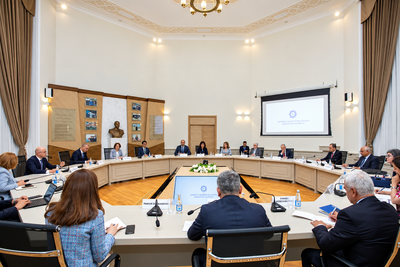
The information was disclosed during a meeting on September 16 between Azerbaijan’s Minister of Energy Parviz Shahbazov and a delegation led by Satya Srinivas, Executive Director of the Board of Directors of the Asian Development Bank (ADB). The green energy corridor project, which is planned to run across the Caspian Sea, is being studied with the support of the ADB.
During the meeting, the sides discussed long-term cooperation between Azerbaijan and the ADB in the energy sector, the development of renewable energy sources, the establishment of regional green energy corridors, the strengthening of electricity grids, offshore wind energy and district heating projects.
Parviz Shahbazov briefed the delegation on Azerbaijan’s efforts to ensure energy security, diversify its energy system and develop renewable energy. He noted that the share of renewable energy sources in the country’s total installed power generation capacity is expected to exceed 30 percent next year. It was also noted that studies of the electricity grid are underway to determine the possibilities for integrating new renewable energy capacities into the national energy system.
The meeting highlighted the importance of developing electricity transmission infrastructure and regional interconnectors alongside generation capacity, amid growing electricity demand driven by the development of artificial intelligence, data centers and digitalization.
The sides also reviewed efforts to establish green energy corridors along the “Caspian Sea – Black Sea – Europe,” “Azerbaijan – Georgia – Türkiye – Bulgaria” and “Azerbaijan – Central Asia” routes. In addition, they discussed the development of a route for supplying electricity to Türkiye and Europe via Nakhchivan. The parties also considered the possibility of involving international financial institutions in financing the project, which is planned to have a total transmission capacity of approximately 4 GW and to be implemented in three stages.