09.07.2026
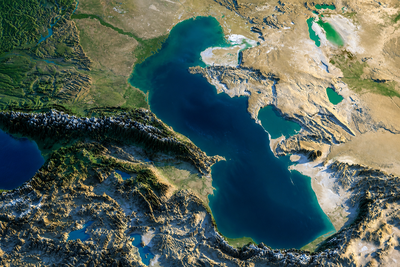
Kazakhstan has begun studying the feasibility of constructing the Trans-Caspian Oil Pipeline, which would run along the seabed of the Caspian Sea to Azerbaijan's capital, Baku. The project's primary objective is to increase exports of Kazakh crude oil to global markets via the Baku–Tbilisi–Ceyhan (BTC) Oil Pipeline.
The information was reported by Vesti.az, citing Nurlan Zhumagulov, Head of Kazakhstan's Energy Monitor research center. According to Zhumagulov, the Pre-FEED (Preliminary Front-End Engineering Design) stage of the Trans-Caspian Oil Pipeline project could be completed this autumn. If the project proceeds, it has been proposed that the pipeline should originate near the Kazakhstan–Turkmenistan border in order to reduce construction costs. This route represents the shortest distance across the Caspian Sea to Baku.
He also noted that the project would be implemented under bilateral agreements between Kazakhstan and Azerbaijan and would involve cooperation within the economic sectors of both countries in the Caspian Sea.
It is worth recalling that in June this year, Kazakhstan's Minister of Energy, Yerlan Akkenzhenov, stated in an interview during Baku Energy Week that the country is technically capable of transporting 7–7.5 million tonnes of oil annually via Baku and the Baku–Tbilisi–Ceyhan (BTC) Oil Pipeline. At the same time, he emphasized that any further increase in export volumes would depend on available logistical capacity.
For its part, the Azerbaijani government also confirmed to Vesti.az that Kazakhstan is exploring the possibility of constructing an oil pipeline across the Caspian Sea to Baku. It also expressed its interest in increasing the transit volumes of Kazakh crude oil through Azerbaijan's export pipeline infrastructure.
Kazakhstan has been regularly exporting part of its crude oil through Azerbaijan since 2023. In 2026, these shipments are expected to reach 1.5–1.6 million tonnes. By comparison, 1.27 million tonnes of Kazakh oil were transported via Baku in 2025. The oil is first delivered by tankers to the Sangachal Terminal and is then exported to international markets through the Baku–Tbilisi–Ceyhan (BTC) Oil Pipeline.