08.06.26
Uzbekistan, the heart of the historic Silk Road, is accelerating the development of its tourism sector by combining its rich cultural heritage with major infrastructure investments. Through visa facilitation measures and transportation improvements, the country has nearly doubled its number of visitors over the past six years. It now aims to welcome 15 million tourists annually through its “four-season tourism” strategy.
Record Growth in Visitor Numbers
Positioning tourism as one of the strategic pillars of its economy, Uzbekistan is reaping the benefits of its open-door policies. The country welcomed 6.748 million foreign visitors in 2019, while last year the number rose by a record 46.8 percent to reach 11.7 million tourists.
The upward trend has continued this year. During the first four months of the year, the number of visitors increased by 29.9 percent compared to the same period last year, reaching 4,048,417. The leading source countries include Türkiye, Russia, China, Kyrgyzstan, Tajikistan, Kazakhstan, Afghanistan, and Turkmenistan. Authorities aim to increase annual arrivals to 20 million in the medium term.
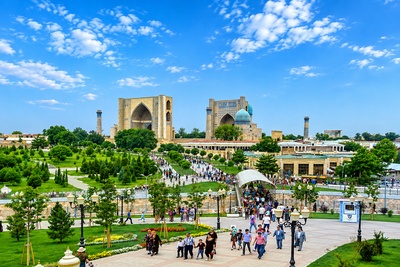
The UNESCO World Heritage cities of Samarkand, Bukhara, Khiva, and Shahrisabz remain the country's primary tourism attractions. However, the Uzbek government is also developing new destinations to spread tourist activity throughout the year rather than concentrating it in historic cities alone.
As part of this effort, substantial investments have been made in the Zaamin tourism zone in Jizzakh Region and the Charvak area. Located at an altitude of 2,500 meters above sea level, Zaamin now features more than 20 hotels, modern cable car systems, and one of Central Asia’s longest pedestrian bridges, creating a new ecotourism corridor for the spring and summer seasons.
New Winter Tourism Destinations: Amirsoy and Chimgan
Winter sports play a key role in Uzbekistan’s year-round tourism strategy. The Chimgan and Amirsoy ski resorts, located about 70 kilometers from Tashkent, attract thousands of skiing enthusiasts, particularly from CIS countries, thanks to their modern slopes and facilities.
Guinness Record Festivals and Gastronomy
International festivals also make a significant contribution to tourism. This year, the 65th Namangan International Flower Festival, during which 150 million flowers were planted throughout the city, entered the Guinness World Records in the category of “most flowers planted within one month.” More than one million tourists from over 50 countries are expected to attend the 40-day festival.
In addition, gastronomy festivals centered on Uzbekistan’s famous pilaf help promote the country’s culinary culture worldwide.
A 24-Hour Train Journey Reduced to 7 Hours
Modernization of transportation infrastructure has dramatically reduced travel times. High-speed rail lines connecting Tashkent with the country’s historic cities have provided a major boost to tourism. According to tourism experts, a train journey from Tashkent to Khiva, which once took 24 hours, can now be completed in as little as 7 hours. An increase in airline services to historic cities and the convenience of the e-visa system are helping Uzbekistan become one of Central Asia’s fastest-growing tourism destinations and strengthen its position in the global tourism market.